Over the last three years, I have lived through more uncertainty than I ever imagined possible.
Everything familiar and stable in my life has been gradually stripped away.
In July 2023, my husband left me for a work colleague to pursue a different lifestyle.
In July 2025, the charity where I worked closed, and overnight I lost both my job and my home, which had been provided through my role.
Within two years, I lost my marriage, my job and my home.
For someone who likes to plan, reflect and find meaning in life, it was deeply unsettling. I kept trying to understand what God was doing. Was this part of a bigger plan? Was it simply the painful reality of living in a fallen world? Was there some lesson I was meant to be learning?
People tried to help.
Some told me that something better must be around the corner. Others reassured me that God had a purpose in it all.
But the truth was: I felt lost in circumstances that were completely beyond my control and had no idea what God was saying.
What I did know was that if I could not find some psychologically safe way to live with this level of uncertainty, I was going to struggle badly.
When my husband left, I had no idea what life would look like. When I lost my job and home, the uncertainty became painfully practical: where would I live, and what on earth would I do?
I was becoming exhausted from trying to interpret every loss, every ending and every unexpected turn. Did it mean this? Did it mean that? It was phenomenally tiring.
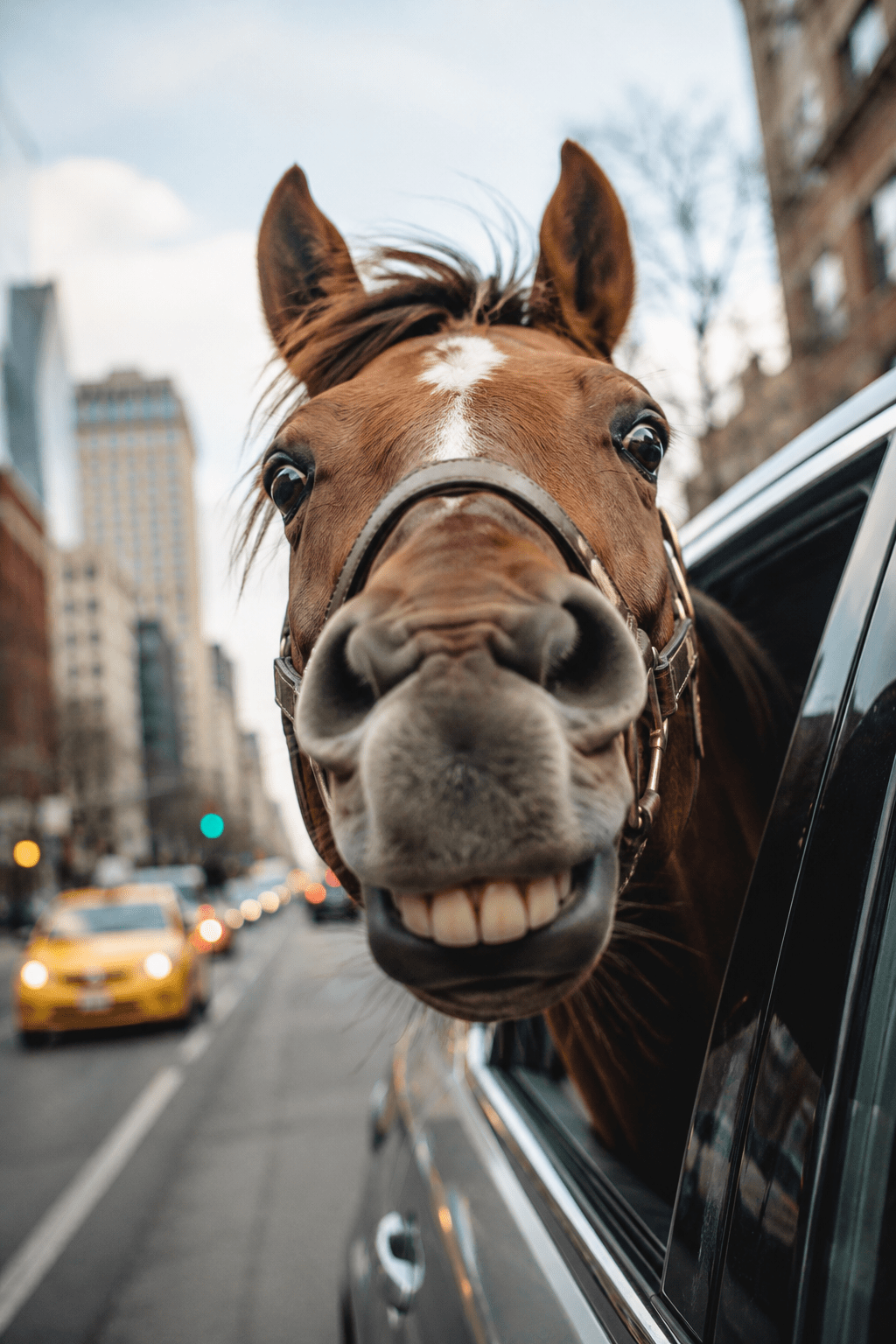
And then I came across the story of the old man and the horse.
It is an ancient Chinese fable known as Sāi Wēng Shī Mǎ.
The story revolves around an old man who lived in a village and owned a horse.
One day, his horse ran away, and the villagers expressed their sympathy, considering it a great loss.
However, the old man remained calm and simply said, “Who knows if it’s a good thing or a bad thing?”
A few days later, the old man’s horse returned, leading a group of wild horses back to the old man’s stable.
The villagers rejoiced at his good fortune, considering it a great gain. Again, the old man responded, “Who knows if it’s a good thing or a bad thing?”
The old man’s son was tasked with taming the wild horses. During the process, he fell off one of the horses and broke his leg. The villagers viewed this as a tragedy, while the old man remained composed, repeating his mantra, “Who knows if it’s a good thing or a bad thing?”
Soon after, war broke out in the region, and the government conscripted all young men from the village to join the military. Due to his injury, the old man’s son was exempted from serving. Once again, the villagers considered it a stroke of luck, but the old man remained unperturbed, reiterating, “Who knows if it’s a good thing or a bad thing?”
That story helped me more than almost anything else.
Because eventually I realised something incredibly freeing:
I did not need to decide whether what was happening to me was ultimately good or bad. I did not need to force meaning out of every painful experience while I was still living through it.
Who knows if it’s a good thing or a bad thing?
Some things only make sense in hindsight. Some things may never make sense at all.
And strangely, accepting that fact brought me peace.
It reminded me of the words of theologian Søren Kierkegaard’s:
“Life can only be understood backwards; but it must be lived forwards.”
I think faith sometimes involves accepting that we cannot yet see the full picture. Scripture is full of people who only recognised God’s hand after they had walked through confusion, loss or wilderness. Think of Joseph, Paul and Peter – all only understanding once events had unfolded.
So if you are in the middle of something painful or uncertain, perhaps you do not need to solve it immediately.
Perhaps you do not need to work out exactly what God is doing today.
Perhaps, for now, life is simply to be lived one day at a time – resting in the words:
“Be still, and know that I am God.”


Leave a Reply